
Bamboo or Carbon? What Each Viper Shaft Material Actually Does
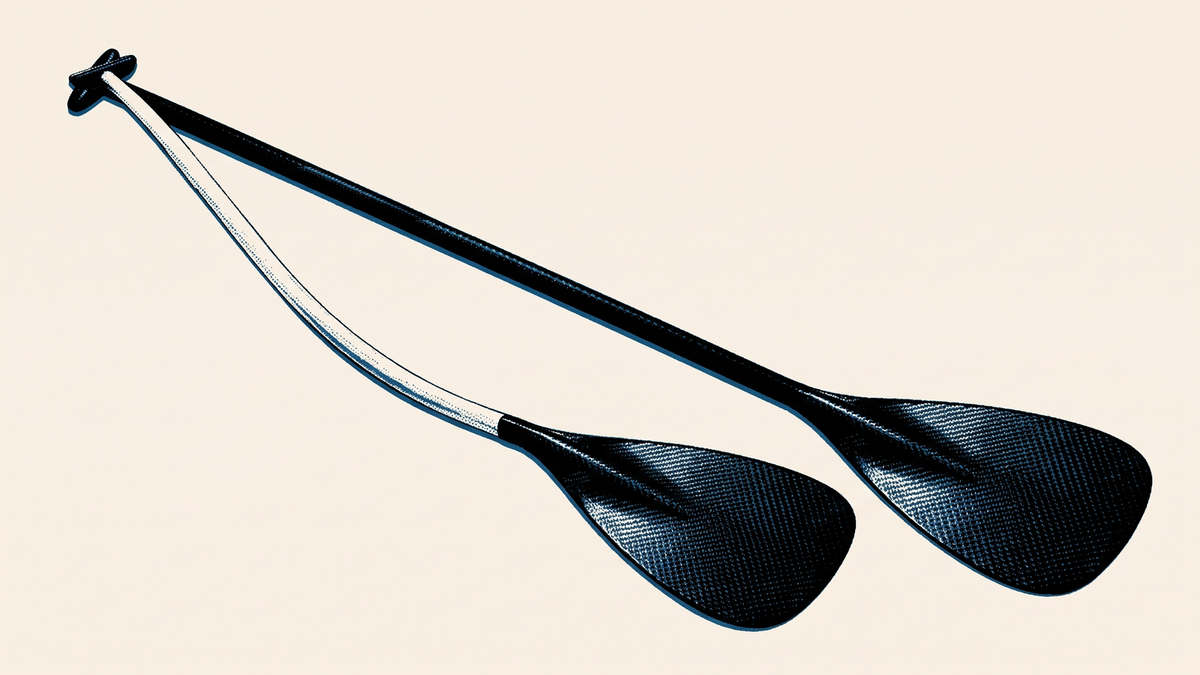
Bamboo flexes. Carbon does not. That one difference is what you are choosing between when you pick a Viper shaft, and it changes how the paddle loads, how it feels at the catch, and what it costs. Soft is 100% bamboo and the cheaper build; Hard is 100% carbon — stiffer, lighter and dearer. Here is what each one actually does.
What each material does
Bamboo, then carbon, property by property.The argument, and the rules
Both camps, then what your association says.Lifespan, care and the call
What the cheaper option asks of you.The material choices on a Viper shaft determine flex and feel
A custom Viper shaft comes two ways, and the choice is a material choice: Soft is 100% bamboo, Hard is 100% carbon. Everything that follows — how it loads, how it feels, what it asks of you — comes out of that.
| Shaft flex | What it is | What it costs |
|---|---|---|
| Soft | 100% bamboo | The cheaper build |
| Hard | 100% carbon | About $40 more on nearly every custom Viper |
The two shaft flex options on a custom Viper · Live catalog
Hard is the dearer of the two. What the extra money buys is stiffness — and whether that is worth it to you is the question the rest of this guide answers.
What bamboo does
A bamboo shaft behaves like a spring. Everything below follows from that, and each one has a cost attached.
-
01It stores and returns energyLoading the pull bends the shaft and stores energy, then releases it when you relax at the exit. The trade: the exit is the one place in the stroke where that energy cannot drive the boat. Some of it is genuinely lost.
-
02It damps vibrationWood and bamboo absorb vibration as a material, separately from bending. That is the “warmer” feel paddlers describe. The cost is the same softness that blunts feedback from the blade.
-
03It softens the load spike at the catchThe spring takes up the load instead of dumping it straight into you. Less shock into the joints — but also a less immediate connection to the water.
-
04You feel the recoil as rhythmThe shaft talks back at the exit, which many paddlers use for timing. Carbon's critics describe the alternative as “lifeless” and the exit as “dead” — their word for the same property missing.
-
05It carries more massMore weight to swing, which is real fatigue over thousands of strokes. Some paddlers want it: the momentum helps the recovery swing and the rhythm that comes with it.
-
06It dents instead of crackingA sharp slap of a wooden shaft against something hard usually only dents it. The cost is upkeep — see the care section below.
What carbon does
Carbon is the opposite trade. Stiff, light, direct — and unforgiving in the same measure.
-
01It transfers force instantlyThe stiffest and lightest build, so nearly all of your effort reaches the water the moment you load it. That directness is why it is the sprinter's pick and why it helps hold a higher stroke rate.
-
02It is the most expensiveAbout $40 more than Soft across the custom range.
-
03It is brittle at its limitCarbon breaks rather than bends. A sharp strike that would dent a bamboo shaft can crack a carbon one and render it useless.
-
04It transmits rather than absorbsA mistimed catch has nowhere to go but up the shaft — into the wrist first, then elbow and shoulder. A flexier shaft is more likely to take some of that out; neither shaft prevents anything.
None of this is a safety claim. Any paddle can be broken, and no paddle prevents an injury. What is above is how each material behaves, not a promise about what it will do for you.
Head to head
| Property | Soft — 100% bamboo | Hard — 100% carbon |
|---|---|---|
| Stiffness / energy transfer | Flexes under load; some effort goes into the bending shaft | Barely flexes; nearly all force reaches the water instantly |
| Energy return | Springs back at the exit, where it cannot drive the boat | Almost none — nothing stored, nothing returned |
| Vibration damping | Damps it as a material; warmer feel | Transmits more feedback |
| Shock to the joints | Softens the load | Sends shock into wrist, elbow, shoulder |
| Mass | Heavier; momentum some paddlers want in the recovery | Lightest build available |
| Failure mode | Usually dents | Can crack rather than dent |
| Care | Rinse, keep out of the sun, sand and varnish exposed wood | Rinse; no wood to seal |
| Price | The cheaper option | About $40 more on nearly every custom Viper |
Every property is a trade, not a winner · The same Viper build, two shaft materials
The argument the sport is still having
This is not settled, and you should hear both sides from the people who actually argue them.
The case for all-carbon
One paddle builder makes the pro-carbon case directly. His argument: the flex “spring” reroutes torque out of the powerful part of the stroke and hands it back at the exit, where it is wasted, and a flexing blade develops an inefficient shape that lets water slip away and makes the blade flutter.
If you have a choice between wood and carbon, it's got to be a fine carbon paddle in the end.
The case against all-carbon — Kanu Culture
Kanu Culture puts the other side bluntly: no world-class team races all-carbon paddles. Two paddlers quoted there explain why.
If the shaft of a carbon paddle cannot flex, then the load from the blade is transferred further up the system, to you. Your body's joints, first your wrist, then elbow and shoulder, can be stressed and injured.
Many paddlers prefer a little heavier paddle. The weight helps their swing and thus the rhythm.
That is team-canoe experience: a paddler in a six-seat canoe carries load through the body that a solo paddler does not.
Both camps land in the same place for most paddlers: something other than an all-carbon paddle. On a Viper, that is the Soft bamboo shaft.
The rule that can decide it for you
If you race, your association may make this decision for you — and the answer is different depending on who sanctions your races.
| Association | What the rule says about material | What that means |
|---|---|---|
| SCORA (Southern California) | Section 5.4, in full: “Paddles must be of a single blade design.” | No paddle material rule at all. Wood, veneer, bamboo, carbon, koa and fiberglass do not appear anywhere in the 37-page 2026 rulebook. |
| OHCRA (O'ahu) | Article IX E: paddles “must have 50% visible wood in the shaft, including bamboo, which can be solid or veneer.” | A material requirement that lands on the shaft specifically. Bamboo counts as wood. |
SCORA Race Rules 2026 §5.4 · OHCRA 2026 Race Rules Article IX E
That 50% figure is current: OHCRA clubs voted it in on 11 January 2026, 15 to 3, and it sits in the 2026 OHCRA Race Rules.
Ignore the “51% wood” figure you will find repeated in outrigger writing. It is history, not a rule in force — it appears nowhere in the current OHCRA rulebook. Anyone quoting it to you is quoting a superseded interpretation.
Check which document you are reading. OHCRA still publishes its Moloka‘i Channel rules with the older wording, which set no proportion at all. The rule above is the one in the 2026 Race Rules.
We are not going to tell you a particular paddle is legal for your race. Rules change by association and by season, and only your association rules on your paddle. Read your own association's current rulebook, and ask them if there is any doubt.
How long each one lasts, and what it asks of you
Saving $40 on the shaft is not the end of the ledger.
-
01LifespanOne paddle builder reports most carbon paddles lasting four to ten seasons depending on use and abuse, against three to five years from the best of his wood paddles. Those are one maker's figures, not an industry standard.
-
02RepairabilityTimber takes a lot of abuse and repairs relatively easily. Carbon does not.
-
03Care, if you go bambooRinse the paddle with fresh water, keep it out of direct sunlight when it is not in use, and where the wood is dented or exposed, sand the area down and seal it with a polyurethane varnish. That is KIALOA's guidance for wood paddles.
That is real work, and it is the honest cost of the cheaper option. If you will not do it, the $40 is not the saving it looks like.
So which should you buy?
Buy Soft bamboo if you want the shaft to take some of the hit
The property driving it is the spring: it softens the load spike at the catch and damps vibration, and the recoil gives you something to time off. What you give up: some energy at the exit, a little more weight to swing, and a care routine. It is also the cheaper build, and the one most of our customers choose.
Buy Hard carbon if you want everything to arrive now
The property driving it is stiffness: near-instant transfer and the lightest build, which is what a sprint and a high stroke rate reward. What you give up: $40, the damping, and the forgiveness — a mistimed catch goes into you, and a hard knock can crack the shaft rather than dent it.
Popular is not the same as better. That tells you what this customer base picks — many of them distance paddlers — not that bamboo performs better.
Build From A Clear Choice
Work through the rest of the spec in the custom-order guide, or go straight to the Custom Viper collection. For bend, diameter and length, Paddle Shafts 101 covers all three. Still torn between the two? Spec help is free, and it is a five-minute conversation that saves you a $40 guess.
Frequently Asked Questions
Straight answers on bamboo and carbon shaftsQ1Is the hard carbon shaft worth the extra $40?
Q2What happens when a carbon shaft breaks?
Q3How long does a bamboo shaft last?
Q4Are carbon paddles allowed in OC6 races?
Q5How do I look after a bamboo shaft?
Grounded in the approved SoCal Va'a Knowledge Base articles “Paddle Material — Blade & Shaft”, “Paddle Weight — Pros & Cons”, “Customer Paddle Spec Guidance” and “Viper Order Mix” · Race rules quoted from the SCORA Race Rules 2026 §5.4 and the 2026 OHCRA Race Rules Article IX E · Care guidance from KIALOA · Carbon and hybrid arguments from Kanu Culture and a paddle builder's published construction notes · Prices and options from the live Custom Viper collection