How To Order A Custom
Your paddle, built to your numbers by Viper in Ra'iātea. Here's exactly how a custom order works, from deposit to delivery. Your spec. Your style.
The Not SoFine Print
Straight Talk · No SurprisesHow It Works
Customs are batch orders. You reserve your build; a few days after the batch deadline we place the whole run with Viper. From there it's built from scratch — average wait from the deadline is about 4 months — and we email every update along the way. When your blade comes off the mold it's already yours.
Why $30 Off
You pay up front, which helps our cashflow and lets us order more often — so every custom sells at $30 under retail. Made-to-order costs you less here, not more.
Cancellation
Customs can only be canceled before the batch is sent to Viper. We email you 3–5 days before placing it; you have 48 hours to pull out. No response counts as confirmation to proceed. Once it's with Viper it can't be canceled, returned, or exchanged.
Batch Deadlines & Delivery
Customs build in batches. Reserve by a deadline and your paddle rides that run — miss it and you simply roll to the next batch. Every date below updates automatically.
Dates update automatically — the highlighted row is the batch your order joins today.
SpecYour Blade
Shaft Flex
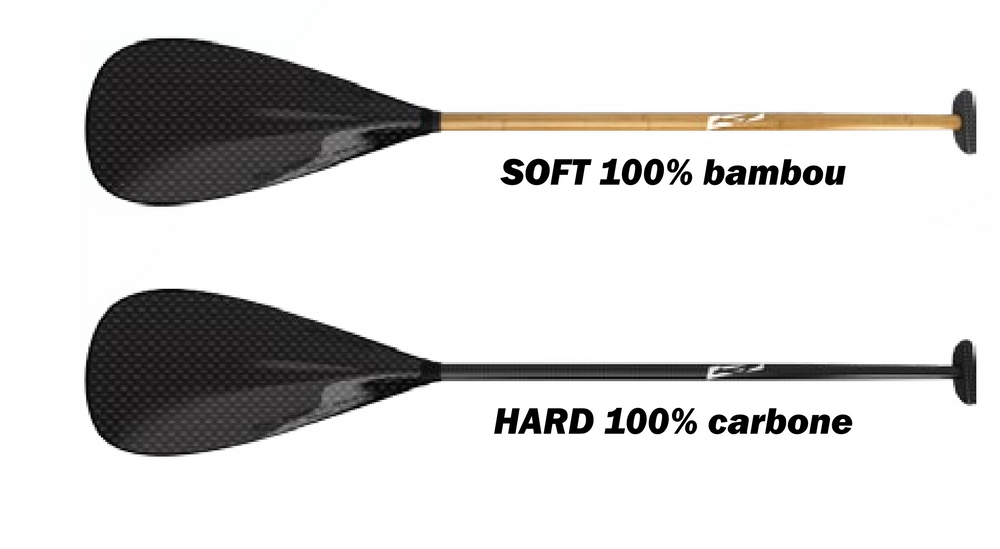
Bamboo flexes; carbon barely does. Hard (100% carbon) is stiff and quick — the sprinter's pick. Soft (100% bamboo) springs back stroke after stroke and is easy on shoulders and elbows — the Tahitian distance style.
Shaft Bend
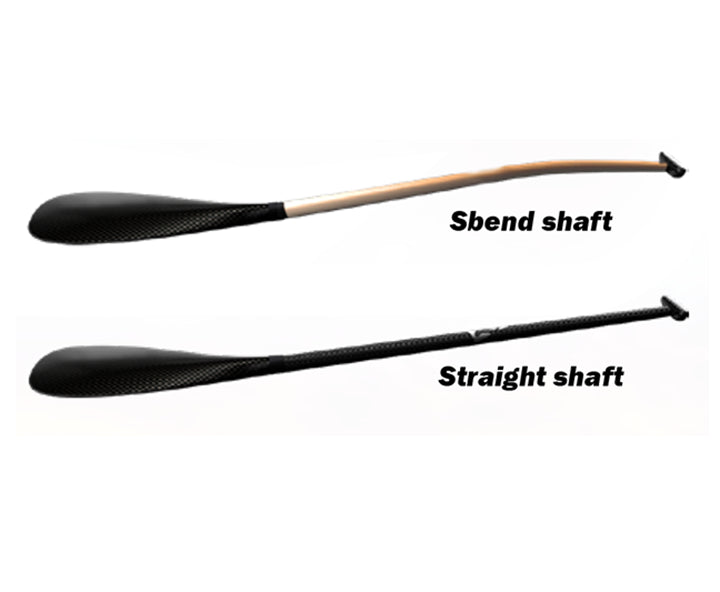
Preference, not physics. An S-bend lines the shaft up with your lower wrist's natural angle. A straight shaft keeps the traditional feel.
Shaft Diameter
Two oval profiles for an ergonomic grip: standard 32 × 26 mm or thin 29 × 25 mm. Go by hand size.
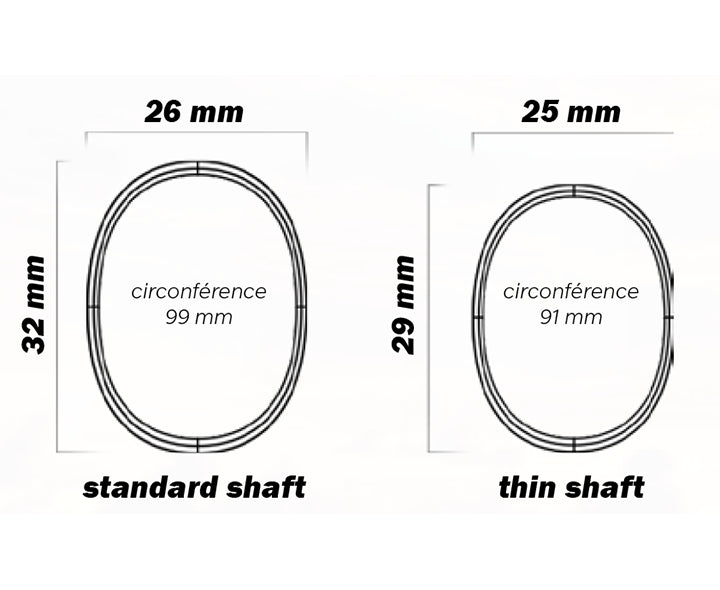
Paddle Length
Cut in half-inch steps. Not sure? Guess a touch long — a paddle can always come down, it can never grow back.
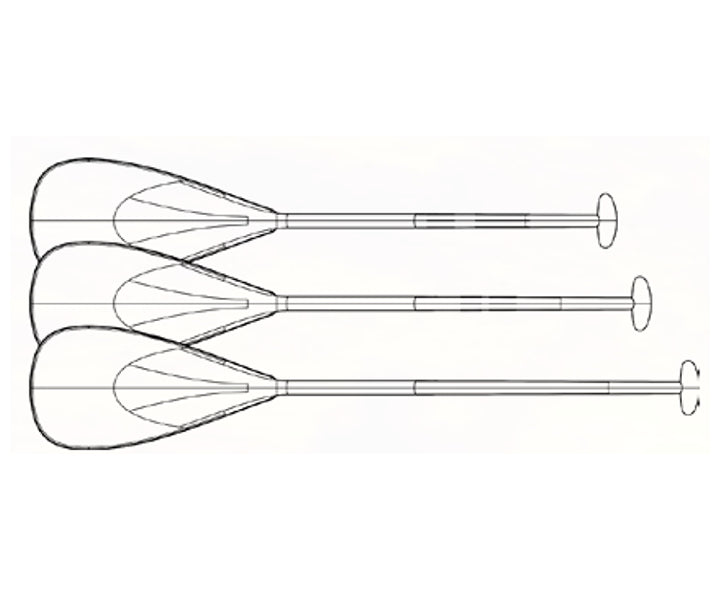
Blade Shape & Size
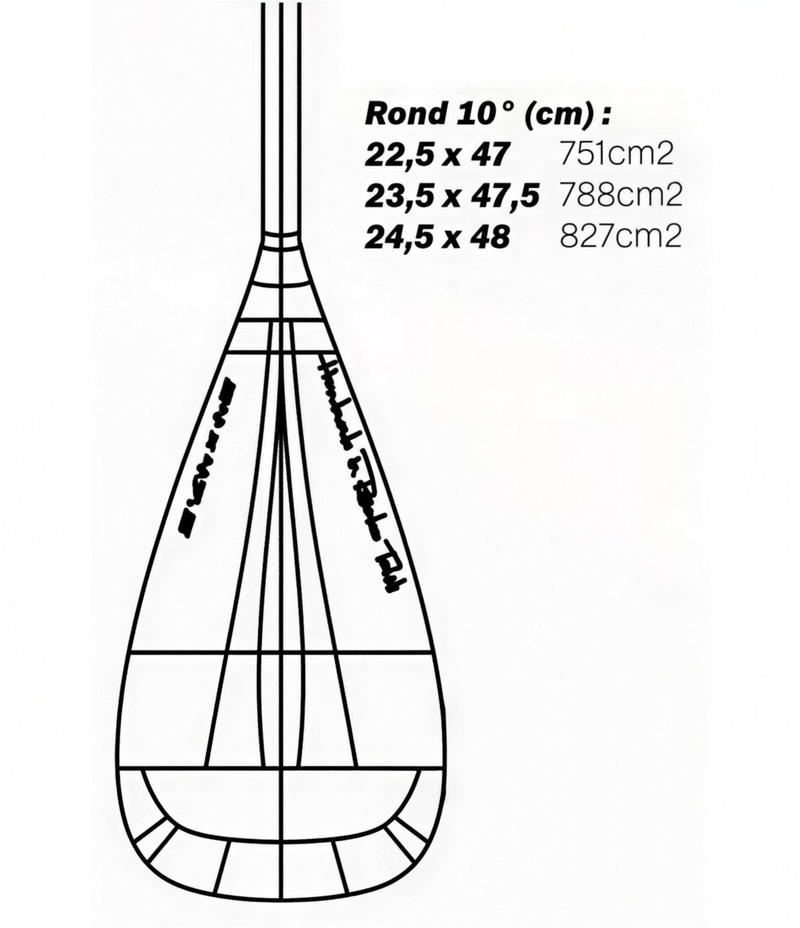
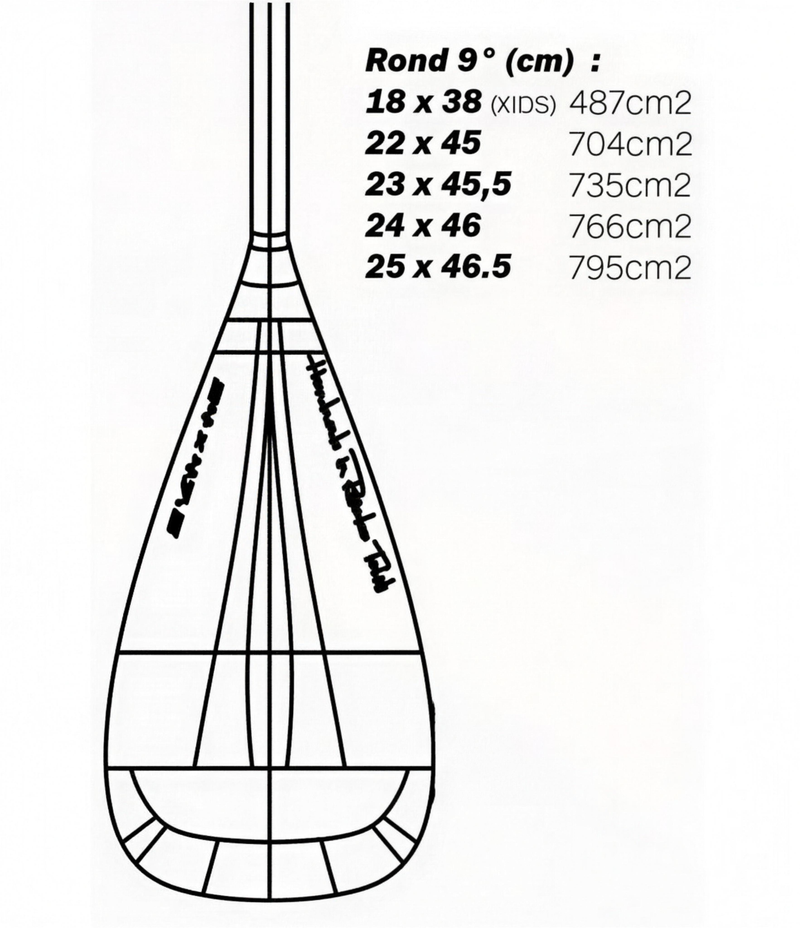
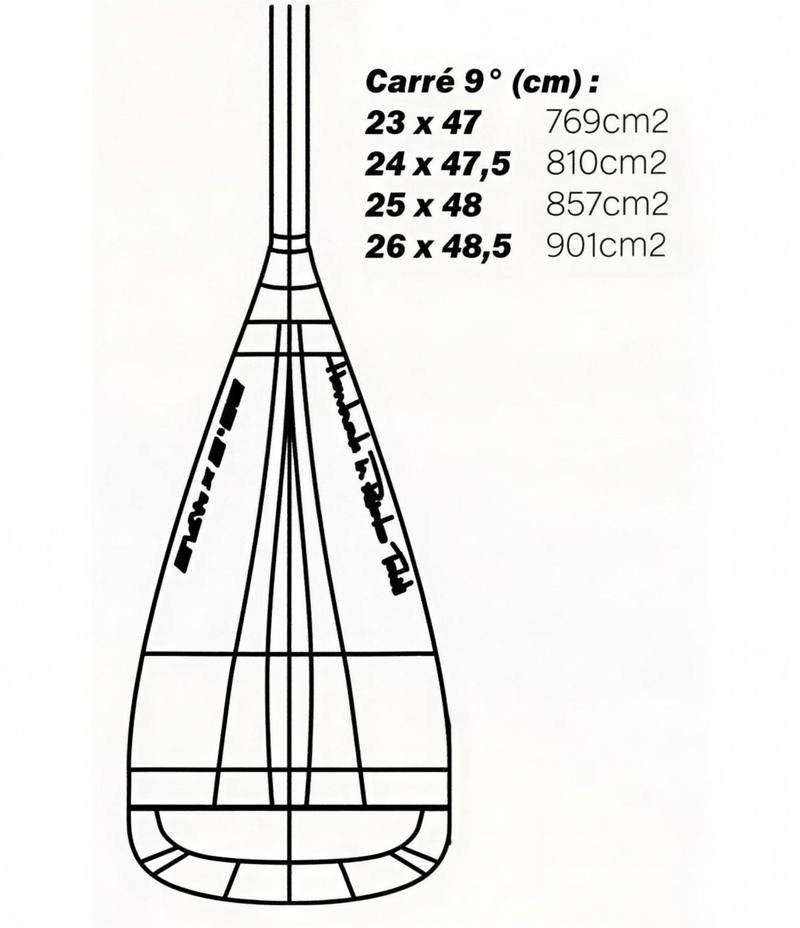
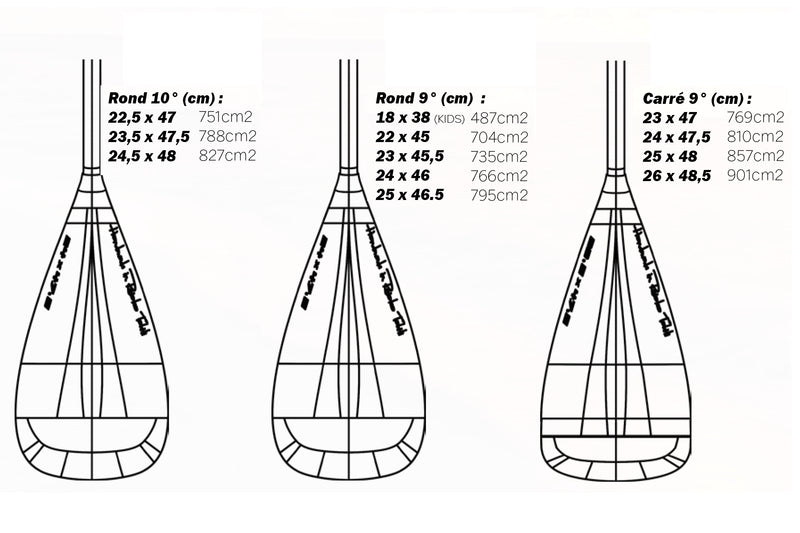
The big one — twelve options in total. Not sure? Decide in this order.
1 · Surface area. The most important factor. Every option lists its surface area in the size, so you can compare blades across the different shapes.
2 · Shape. The shape decides how that area is distributed. A square blade moves the widest area furthest from your bottom hand — a more concrete grab at the catch, but less forgiving if your technique isn't correct. A round blade carries the width slightly higher — a gentler, more forgiving catch that's better for varying stroke rates.
3 · Blade angle · 9° or 10°. A difference so subtle the average paddler won't notice. The angle shifts where the stroke's sweet spot sits — compared to the 9°, the 10° moves the sweet spot further back, trades a little power at the catch for more lift, and allows a longer stroke — which is why the V1 default runs a 10°: the longer stroke helps steering corrections.